Friday Talk [Zoom] - Dr. Cara Wallis - Social Media and Ordinary Life: Affect, Ethics, and Aspiration in Contemporary China
As part of a Gaines Center Cooperative Grant, Dr Yujia He is co-hosting a series of webinars on 'affect' along with Dr Charlie Yi Zhang (A&S Gender Studies) and Dr Michael Samers (A&S Geography). The second of these will be presented by Professor Cara Wallis of the University of Michigan and entitled "Social Media and Ordinary Life: Affect, Ethics, and Aspiration in Contemporary China". Professor Wallis is a leading figure on Internet research and her talk will draw upon her recent book (NYU Press) on the topic of affect, development and tech in the context of social media in the lives of various marginalized groups (e.g. migrant workers, domestic workers, rural micro-entrepreneurs, feminists) in China. The webinar will take place on Zoom https://uky.zoom.us/j/4073288434 at 10am EST on Friday Feb 13. All are welcome (including any students who are interested). Thank you!
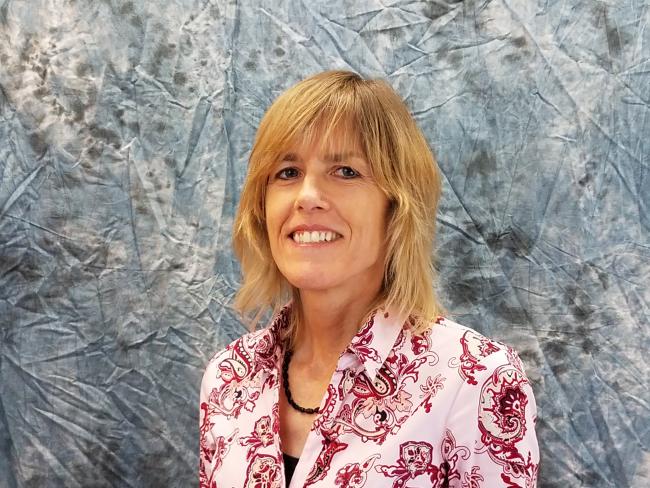
Speaker: Professor Cara Wallis (University of Michigan)
Title: Social Media and Ordinary Life: Affect, Ethics, and Aspiration in Contemporary China
Zoom: https://uky.zoom.us/j/4073288434
Time: 10-11AM EST on Friday, Feb 13
Abstract
In this talk, Cara Wallis will discuss her current book, Social Media and Ordinary Life, which is a long-term ethnographic study that examines how digital media infrastructures and platforms are woven into the rhythms of ordinary, everyday life across geographic locales in China. Focusing on differently disadvantaged groups, Wallis foregrounds the entanglement of affect, emotion, ordinary ethical decisions, and desires as these are articulated to social media. Amid daunting forces – big data, artificial intelligence, mass surveillance – Wallis centers the “small,” showing how structural inequality, the urban/rural divide, patriarchal gender norms, generational differences, and varying levels of social, cultural, and economic capital can lead to contradictory or ambivalent outcomes of technology use. For these marginalized individuals, social media is also deeply intertwined with struggles for voice and aspirations for a better future.
Bio
https://lsa.umich.edu/comm/people/regular-faculty/cara-wallis.html
Cara Wallis is an Associate Professor in the Department of Communication and Media at the University of Michigan. In addition to her current book, she is the author of Technomobility in China: Young Migrant Women and Mobile Phones (NYU Press, 2013), and her articles have been published in numerous journals, including Feminist Media Studies and New Media & Society.
Book Description
https://nyupress.org/9781479825035/social-media-and-ordinary-life/
Focusing on domestic workers, rural microentrepreneurs, disadvantaged young creatives, and young feminists, Social Media and Ordinary Life is a deeply moving ethnography of how digital media infrastructures and platforms are woven into the rhythms of ordinary, everyday life. In choosing to foreground marginalized groups and communities, Cara Wallis gently shifts our attention away from the world of “social media influencers” and tech-centric discourses of entrepreneurial lives towards a decidedly ambivalent terrain of routine life practices.
Social Media and Ordinary Life argues that understanding these individual experiences of the everyday enables greater insight into larger transformations taking place in contemporary China. Through long-term ethnographic fieldwork across China, Wallis foregrounds the entanglement of affect, emotion, ordinary ethical decisions, and desires connected to social media as it is used for self-expression, self-representation, fights for equality, maintenance of community, and economic livelihood. Four case studies show how social media is integrated into the articulation of affects by a wide variety of “ordinary” Chinese subjects: disadvantaged young creatives who migrate to Beijing from rural areas and use social media to cultivate their personal aesthetics; micro-entrepreneurs in rural Shandong province, especially women whose affective ties to the patriarchal family constrain their use of technology for economic enhancement; domestic workers, all women, in urban homes who use social media to build community and construct themselves as ethical subjects; and young feminists spread across China who engage in various types of cultural production and deploy social media in their fight for gender equality, often facing social and/or political marginalization in the process.
Amid daunting forces—big data, artificial intelligence, massive surveillance—this book centers the “small,” showing how structural inequality, the urban/rural divide, patriarchal gender norms, and generational differences lead to contradictory or ambivalent outcomes of technology use. Even so, for these individuals and many others, social media is deeply intertwined with aspirations for a better future.
This event is partly supported by the University of Kentucky Gaines Humanities Cooperatives “Mapping the Affective, Rhetorical, Socio-cultural, and Symbolic Dimensions of Global Cities” (Charlie Yi Zhang, Michael Samers, Yujia He)